Agentic AI for Real Estate

Co-Founder & CEO of CLRT
I spent the better part of two decades in property, so let me say the thing the industry rarely admits about itself. Real estate looked like a business about buildings, but it ran on two things: information asymmetry and follow-up. Agents made money because they knew what buyers did not, the listings, the comparables, the market intelligence. The portals have all but finished destroying that asymmetry. What is left, and what AI supercharges, is the second thing. You never had a lead problem. You had a follow-up problem, and follow-up is the one job an agent never gets tired of doing.
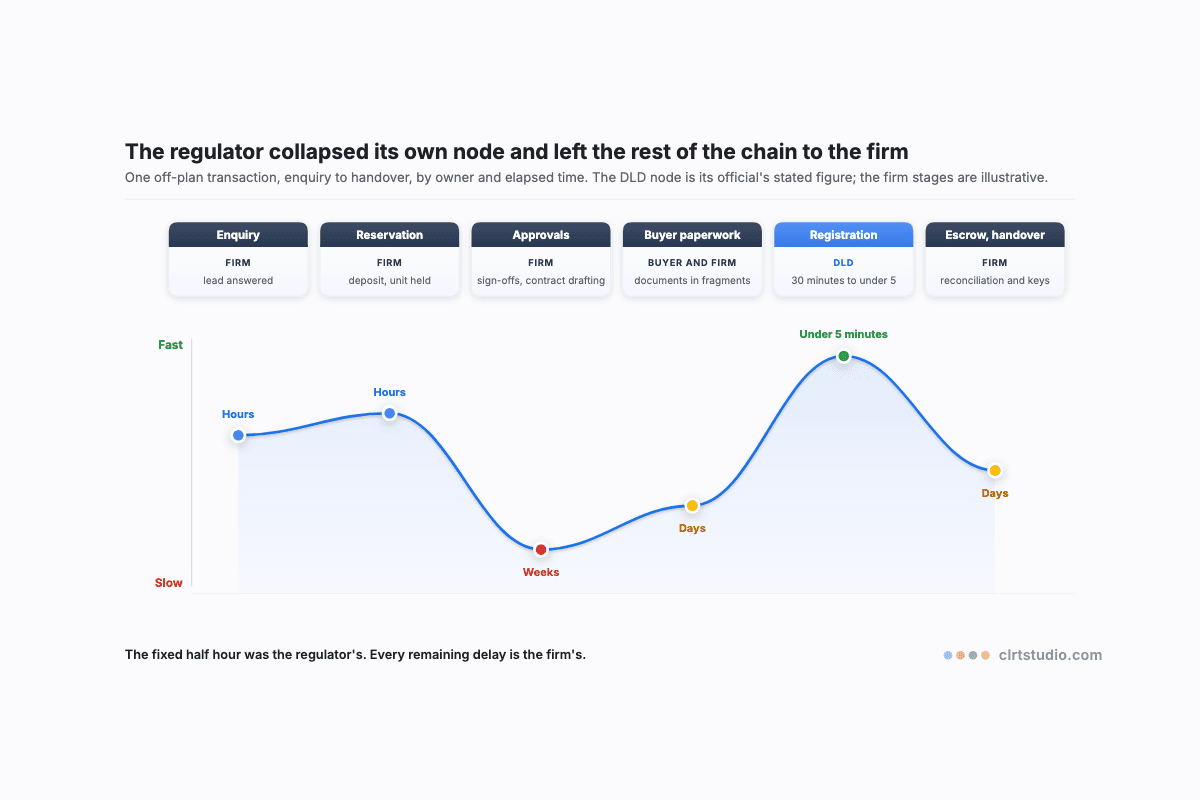
Be honest about how leads die in this business. Most do not die because they were bad. They die because nobody responded fast enough, or nobody stayed with them long enough. The speed-to-first-contact that separates a converted lead from a dead one is measured in minutes, and no human team covers every enquiry within minutes across every hour. The persistence that eventually converts the slow-burn buyer requires chasing that humans abandon out of fatigue or forgetfulness. Both of those, instant response and tireless persistence, are precisely the job-shapes an agent does best, never sleeping, never dropping an item, never deciding a lead is not worth one more message.
This reframes where a real estate professional's value now sits. The information edge is gone for everyone, so competing on it is a race to zero. The surviving edge is relationship and responsiveness, the human moments of trust, negotiation, and judgment, and the speed to be present the instant a buyer raises a hand. AI does not replace the agent there. It lets a small team be responsive at a scale that used to require a large one, so the human hours concentrate where they actually close deals.
The portals took your information edge and they are not giving it back. What is left is speed and relationship, and that is exactly what an agent layer delivers.
A deeper dive
The lead lifecycle is a textbook agentic workflow once you see it as one. Instant qualification and response the moment an enquiry lands, enrichment of the lead from available data, persistent multi-step follow-up on a cadence that no item escapes, and clean handoff to a human at the moment a real conversation becomes possible, which is multi-step coordination and tireless follow-up stitched together. Transaction coordination is the other large opportunity and a different shape: document-heavy, deadline-driven, full of extraction and monitoring work, where an agent tracks conditions, chases missing paperwork, and flags a slipping date before it slips. Market analysis sits in the judgment-laden group, useful as a fast first-pass synthesis that a human sharpens, never as the final word. The design principle throughout is to let the agent own speed and persistence and to reserve the human for the high-trust, high-stakes moments, the negotiation, the relationship, the close, which is simply pointing each kind of work at whoever, or whatever, is best at it (the logic of the Zone of Genius, the narrow band of work a person is both genuinely good at and energised by).
Work with CLRT
Your information edge is gone, but your follow-up was always the real leak, and it is the easiest thing in the business to fix. CLRT helps property firms put instant, tireless follow-up on every lead and reserve their people for the moments that actually close. Let us look at where your leads are really dying.

Vishal Sachar is the Co-Founder and CEO of CLRT, where he helps UAE businesses make sense of applied agentic AI and put it to work. He writes on agentic systems, AI governance, and the economics of automation. Reach him at vishal@clrtstudio.com or on LinkedIn.