Fifty Workflows Is the Wrong Unit of Value

Co-Founder & CTO of CLRT
There is a genre of article that promises fifty agent workflows that make money while you sleep. Treat the existence of that genre as the real story. Anyone can now ask a frontier model to enumerate fifty money-making agent workflows and get a competent answer in seconds. If the list were the asset, it would already be worthless, because everyone holds the same one. The interesting question is not which workflows. It is why almost none of them survive contact with a real business.
Start with the uncomfortable observation. The model is a commodity, and so is the list. The content, sales, support, code, and research patterns are not secret and they are not defensible. Opus 4.8 makes long-running agentic work more realistic, which only accelerates the commoditization of the idea, because the idea was never the scarce part. Pointing an agent at your outreach or at your pull request queue is obvious. The scarce part is judgment about which of those is worth automating inside your specific business, and the engineering to make it hold once you stop watching.
Here is what most lists get backwards. The workflows that look easiest to automate are usually the ones that cost the most when they fail, and the cost stays invisible until it compounds. An agent that drafts content fails loudly and harmlessly: you read the draft, you see it is wrong, you delete it. An agent that qualifies a lead, touches a customer, moves money, or merges code fails quietly and expensively. It is confidently wrong in a way that looks finished, and nobody is in the loop to catch it. The demo and the disaster are the same prompt. What separates them is everything that does not show up in a screenshot, which is exactly the part a list cannot give you.
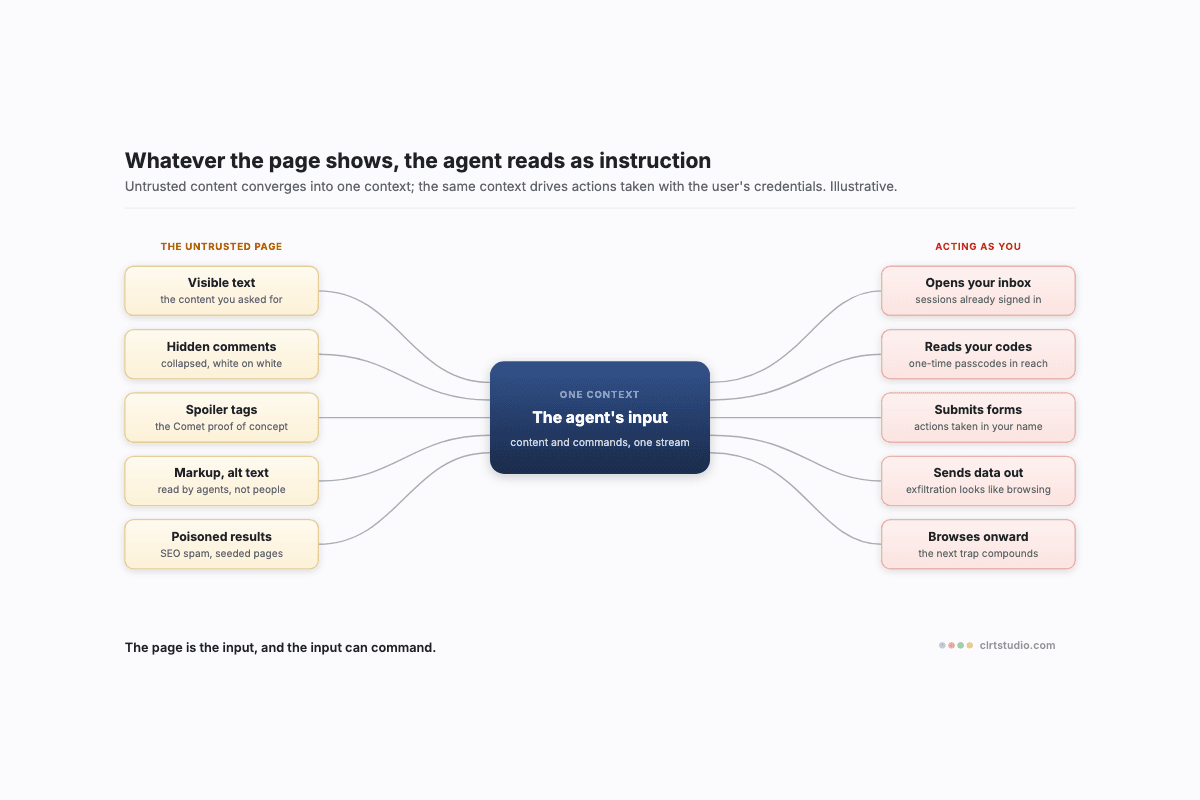
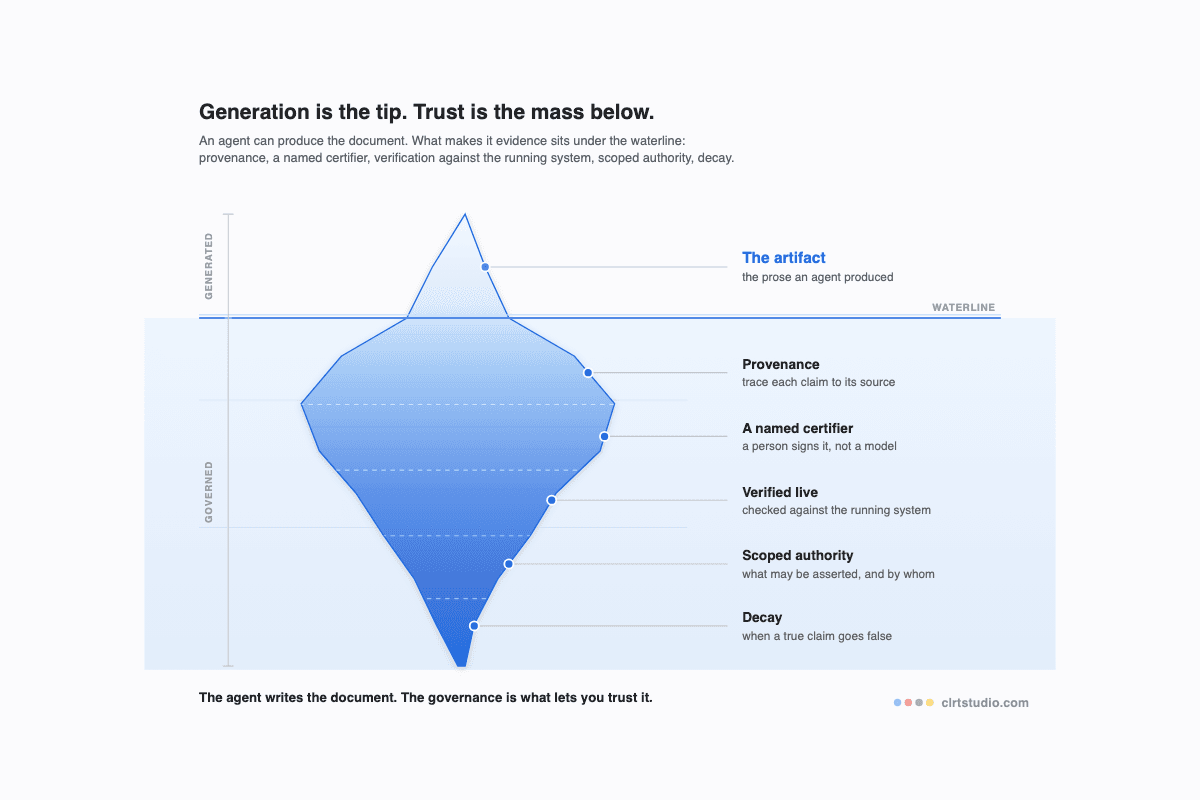
So the real question is never which fifty workflows. It is whether a single one can be trusted to run when you are not there. That means verification that defines what wrong looks like before the agent runs, an escalation path for the cases it should not decide alone, budgets and stop conditions so a loop cannot bill you into a hole, logs that answer who asked for what and why, and identity boundaries so the agent that reads your support inbox cannot quietly act on your production database. None of that is model work. It is systems work, and it is where in-house attempts stall, because the team builds the impressive part first and discovers the boring part is the actual product three weeks later, after it has already failed once unwatched.
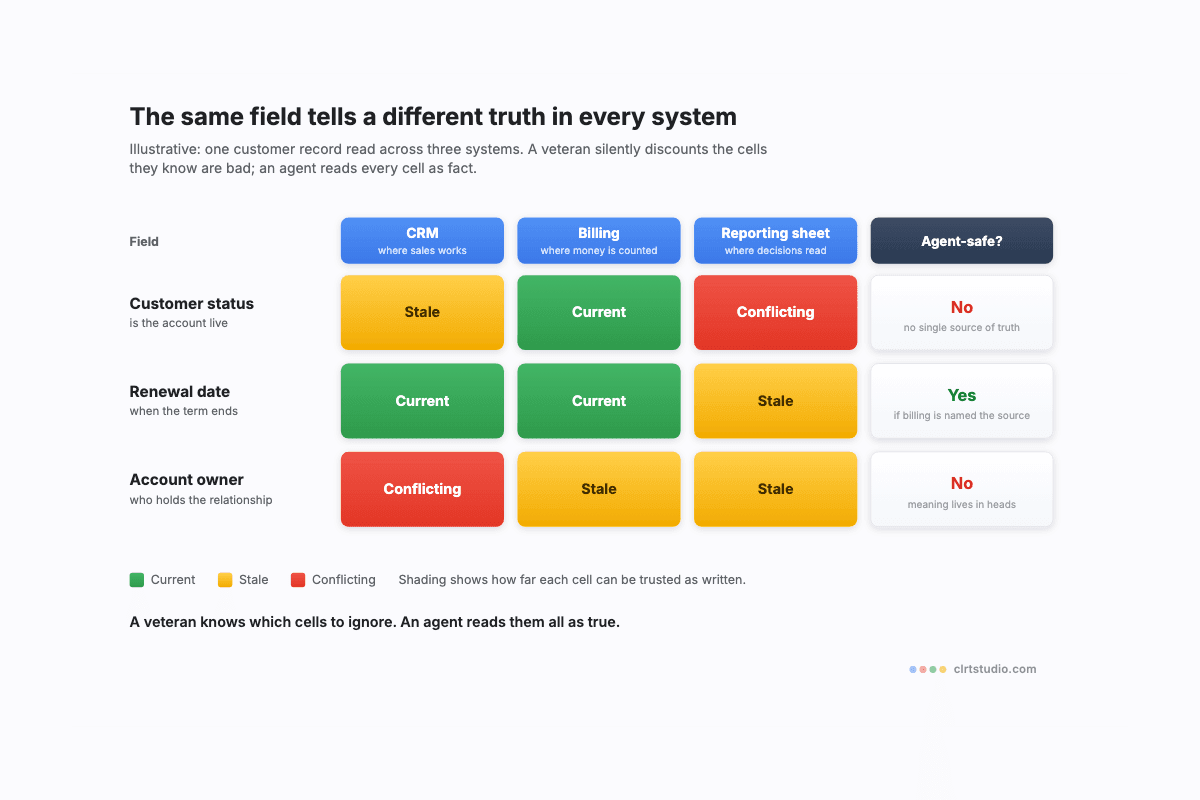
Before any of that sits the decision almost no one makes well: where to point the agent at all. Most teams aim it at the visible task, the one that is annoying and obvious, and automate a chore. The leverage is usually one step away, in the judgment-heavy step nobody thought was a candidate, or in the verification layer of a process that is already automated and silently producing errors. Knowing where to point is not a prompt. It is a read on the business, the risk, and the second-order effects, and it is the difference between an agent that saves an hour and one that moves the unit economics.
The list of workflows is free. Knowing which one survives contact with production is not.
A deeper dive
The interesting engineering is not in getting an agent to do the task. It is in getting it to refuse the task it should not do, to know the edge of its own competence, and to hand off cleanly when it reaches that edge. A trustworthy agentic system is mostly negative space: the cases it declines, the actions it drafts but never sends, the thresholds below which it escalates to a human, the diff size above which it stops and asks. Building that requires deciding, in advance and in specifics, what failure looks like for this exact process in this exact business, then encoding it as something harder to charm than a politely worded instruction. A test. A calculation. A constraint in the database. A human approval queue. Models are persuasive and occasionally lazy, and a verification layer that asks the model whether its own output looks good is not verification at all. The discipline of designing systems that assume the agent will eventually be confidently wrong, and stay safe anyway, is rare precisely because it is unglamorous and only proves its worth on the night nobody is watching.
This is why the in-house build so often produces a graveyard of half-trusted prototypes. The first version works because someone is watching it, so it ships, and the watching stops, and then it drifts, overruns, or quietly emits garbage that nobody catches until a customer does. The failure is never the model. It is the absent governance, the missing audit trail, the scope that was never bounded, the stop condition that was never written. Those are the parts that do not demo well, do not generate excitement, and do not get budget until something breaks. Our view is that the model is the cheapest and most replaceable component in the entire stack, and that the durable value sits in the layer around it: where to point it, how to verify it, how to govern it, and how to make a business trust it enough to take its hands off. That layer is what we build, and it is the part you cannot download as a list.
Work with CLRT
If that description fits a workflow sitting unused in your company, the gap is not the model and it is not the idea. It is the judgment about where to point it and the engineering to make it trustworthy when you are not in the room. That is the work CLRT does. Bring us the agent you almost trust, and we will build the one your business can actually run without you.

Mahdi Salmanzade is the Co-Founder and CTO of CLRT, where he builds agentic systems, developer tools, local-first AI, and security-first infrastructure. Reach him at mahdi@clrtstudio.com or on LinkedIn.