AI Is the Easy Part. Knowing Where to Point It Is the Job.

Co-Founder & CEO of CLRT
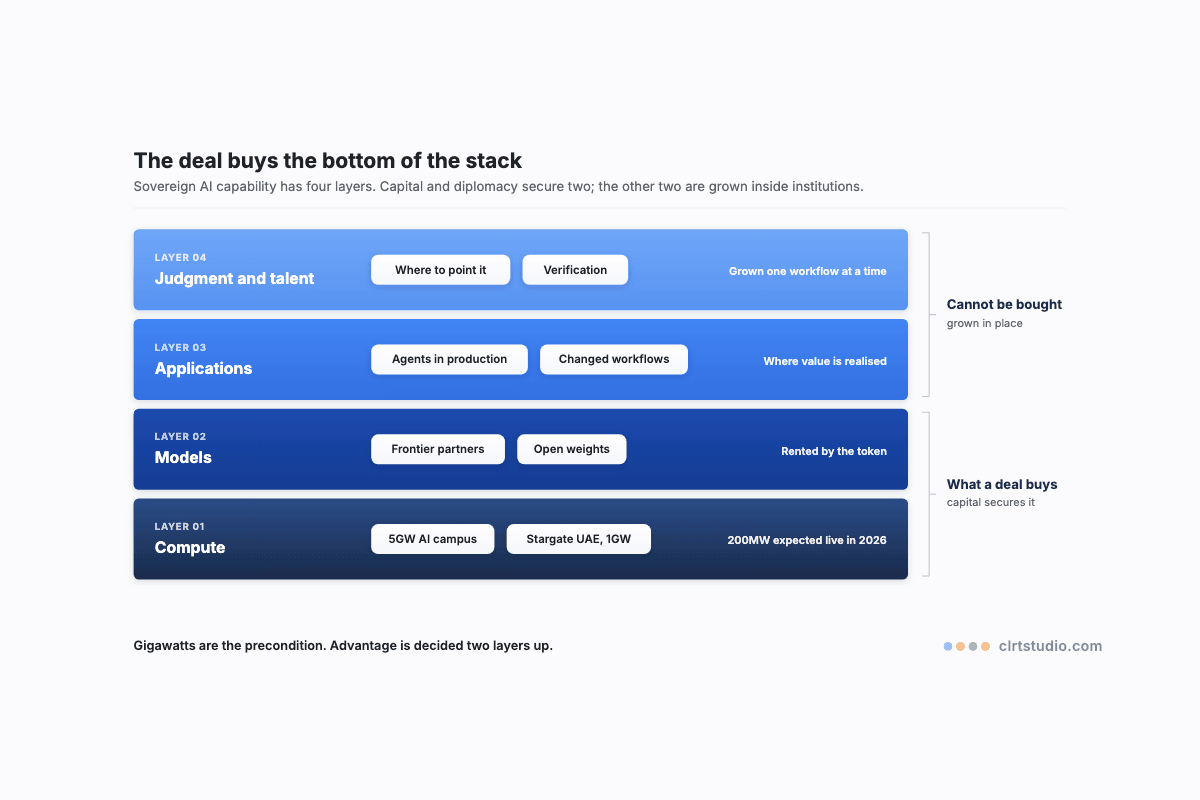
Every firm in this market can now buy the same models. The scarce thing was never the technology. It is the judgment to look at a business, understand its people and its real constraints, and know exactly where a tool creates leverage and where it creates expensive theatre. That judgment is the consulting work. It is the part the model cannot do for you.
The tool has become a utility. By 2026, the large majority of developers use AI assistants in their daily work, and a substantial and rising share of all new code is machine generated. When the same engine is available to everyone, owning the engine stops being an advantage. The race moves to who knows where to drive it.
This is where most AI projects quietly fail, and they fail before a single line of code. A founder says, "I need an agent that does X." Twenty-five years of reading businesses teaches you that X is almost never the real problem. The presenting symptom is a slow process. The binding constraint underneath it is a broken handoff between two people, or a decision that no one actually owns. Point a powerful tool at the wrong constraint and all you have built is a faster version of the wrong thing.
Then there is the human layer, which is the one that actually decides whether anything sticks. Adoption does not fail on the technology. It fails on trust, on who feels threatened, on who is asked to own a workflow they did not design. You cannot automate your way past an organisation that does not want to change. Seeing that resistance before it surfaces, and designing around it, is consulting, not engineering.
So the entire value compresses into one word. Where. Some tasks are genuine leverage. Some are seductive waste, the projects that look impressive and return nothing. Often the most valuable sentence a consultant says in the room is, do not build this. The discipline to say it is what separates an advisor from a vendor.
The model is a commodity. The judgment of where to point it is not. That is the work. That is the part that took twenty-five years.
A deeper dive
"Knowing where" is not intuition, it is a method, and the method is older than AI. It starts by refusing to accept the presenting problem at face value and descending through four layers: the symptom the client names, the value driver it actually touches, the binding constraint underneath that driver, and the real utility function of the person who signs off. Only at the bottom do you know whether a tool helps. This is the Theory of Constraints applied to AI: improving anything other than the bottleneck produces the illusion of progress and none of the gain. Once the constraint is found, every candidate gets sorted into one of four boxes. High value and feasible now is build. High value but blocked by people or data is adoption first. Low value but seductive is seductive waste. Low value and hard is walk away. Most failed AI spend lives in that third box, funded because it looked impressive in a demo.
Work with CLRT
Where would AI actually create leverage in your business? That is the one question the CLRT diagnostic is built to answer, before a single dirham is spent on building.

Vishal Sachar is the Co-Founder and CEO of CLRT, where he helps UAE businesses make sense of applied agentic AI and put it to work. He writes on agentic systems, AI governance, and the economics of automation. Reach him at vishal@clrtstudio.com or on LinkedIn.