Claude Tag: The Friction You Hated Was the Governance You Had

Co-Founder & CTO of CLRT
For two years the complaint about working with AI was always the same. The model lived in a separate tab, and you were the one shuttling context into it and answers back out. You were the integration layer, the memory, the translator between the model and the place where work actually happened. Everyone agreed this was friction, and everyone wanted it gone. Claude Tag removes it. You add the model to a channel, connect it to your tools, and tag it where the work already lives. The market is celebrating the friction's disappearance. Almost nobody is asking what that friction was quietly doing while everyone resented it.
Here is the thing the launch coverage missed. When the model lived in a tab, the human shuttling context was not only an inconvenience. That human was also the control plane. Every action the model influenced passed through a person who read it, judged it, and decided whether it was safe to put back into the channel where it would become real. Copy and paste was slow, but it was also a checkpoint, and most teams never had any other one. Claude Tag removes the friction and the checkpoint in the same motion. What looks like a clean productivity upgrade is the quiet deletion of the only governance layer most organizations ever ran, and almost no one is replacing it with anything.
This matters because of where the model now sits. A chatbot tab was a private room. Slack, the issue tracker, the deploy channel: these are the places where a sentence stops being a thought and becomes a commitment. They are where work is assigned, where decisions become binding, where a go ahead ships something. Moving an agent into that layer does not just make it more useful. It changes the category of mistake it can make. A wrong answer in a tab is a wasted minute. A wrong action in the channel where the team treats statements as authorization is an incident. The interface that made the agent feel like a coworker also gave it a coworker's power to set things in motion, without a coworker's years of learned judgment about when not to.
The most celebrated feature is the most dangerous one. Ambient behavior, the agent acting before anyone tags it, is sold as the moment the thing stops feeling like a tool and starts feeling like a teammate. Look at it from the other side. You have introduced an actor into your organization whose authority nobody explicitly granted, whose individual actions are hard to attribute after the fact, and whose errors propagate at the speed of automation through the exact channels where things become true. A human who started acting on decisions no one assigned them would be managed within a week. An agent doing it is described in the release notes as proactive. The real question is not whether the model is capable. It is whether anyone in the building can say, with precision, which decisions this thing is allowed to make and which it may only prepare.
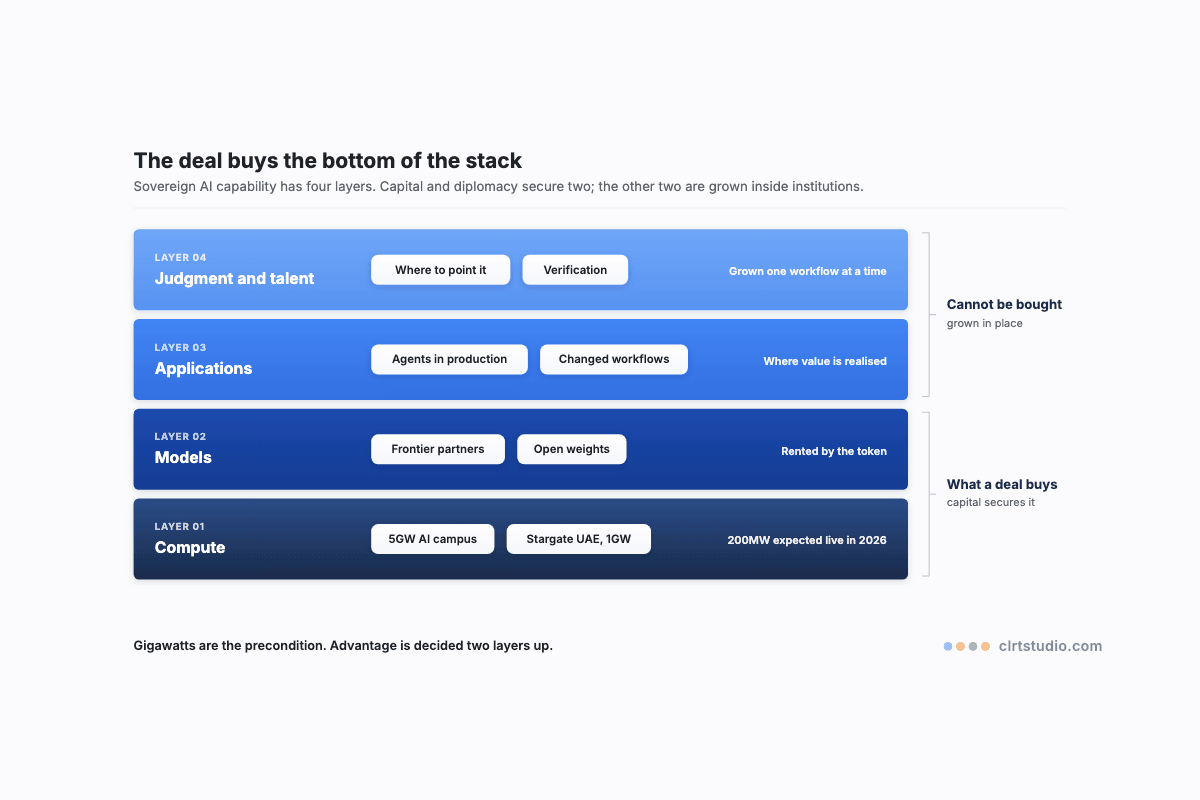
That question is the whole game, and it is not a settings question. The controls exist. Anthropic scopes channels, tools, and identities, keeps the agent out of private channels, and logs who asked for what. Those are necessary, and they are not the hard part. The hard part is judgment that no configuration screen contains: drawing the line, per channel and per task and per tool, between what an agent may do on its own and what it may only stage for a human, and knowing that the line sits in a completely different place for support triage than for a production deploy than for anything touching a customer or money. Teams flip every switch on day one precisely because the product makes flipping them trivial, then discover months later that they automated authority they never meant to grant. The model is the commodity. Knowing where to point it, and where to refuse to, is the scarce thing, and it does not ship in the box.
The friction everyone wanted gone was also the only checkpoint most teams ever had.
A deeper dive
The deeper trap is that trust in this setup is built or destroyed in public, and most teams have no way to earn it deliberately. When the agent works in the open thread, every action is visible, which sounds like accountability until you notice that visibility is not verification. Seeing that an agent opened a pull request, closed a ticket, or messaged a customer tells you it acted. It does not tell you the action was correct, in scope, or attributable to a decision someone actually owned. The engineering that closes that gap is genuinely hard and almost always missing from in-house attempts: a record of not just what the agent did but what it was permitted to do and why, checks that run before an action lands rather than apologies after, and a boundary between preparing work and committing it that holds even when the agent is confident and wrong. That is the difference between an agent your team tolerates and one it can actually delegate to. It is also where most internal pilots quietly stall, because the demo is an afternoon and the trustworthy version is the entire problem.
Step back and the launch is not really about Slack, and not really about Claude. Every serious AI company is racing to sit inside the workflow layer, the place where work is assigned and decisions are made, because whoever owns that interface owns execution. That is why this is shipped fast and adopted faster, and it is why the governance debt accumulates quietly underneath. The organizations that win here will not be the ones that installed the agent first. They will be the ones who decided, with real rigor, which slices of their operation an agent may act inside and which it may only assist, then built the verification and the audit trail to make that decision hold under pressure. That work is unglamorous, it is specific to how each company actually runs, and it is exactly the work that gets skipped when the install is a single click. The ease of adoption and the difficulty of doing it safely are growing apart, and the gap between them is where the real expertise now lives.
Work with CLRT
This is the work CLRT does. We do not sell you the agent; you can install that yourself in an afternoon. We decide with you where an agent may act and where it may only prepare, then build the scoping, verification, and audit trail that let your team delegate to it without quietly handing over authority no one meant to give. If you are looking at Claude Tag and feeling both the pull and the unease, that instinct is correct. Bring us the workflow you want an agent living inside, and we will build the one you can actually trust.

Mahdi Salmanzade is the Co-Founder and CTO of CLRT, where he builds agentic systems, developer tools, local-first AI, and security-first infrastructure. Reach him at mahdi@clrtstudio.com or on LinkedIn.